Camilleri, Montalbano and Pirandello: Scala dei Turchi in books and films

Scala dei Turchi really does appear in two works by Andrea Camilleri, the Sicilian author of the Inspector Montalbano novels: his first novel, Il corso delle cose (literally "the course of things"), and the short story La prima indagine di Montalbano ("Montalbano's first case"). There is no verified evidence that it appears in the Montalbano novels, and the TV series was filmed mainly around Ragusa, with the inspector's seaside house at Punta Secca. A few kilometres east are Porto Empedocle, the Vigata of the novels, and Luigi Pirandello's birthplace at Caos.
In which Camilleri books does Scala dei Turchi appear?
His first novel. Il corso delle cose came out in 1978 from the publisher Lalli and was reissued by Sellerio in 1998; it is not part of the Montalbano series. In the epilogue the Scala appears as a snow-white marl hill dropping sheer into the sea just outside town, and the final crime takes place on its steps. The novel also gives its own version of where the name comes from; the traditional version is on our page on why it is called Scala dei Turchi.
Montalbano's first case. La prima indagine di Montalbano is the title story of a collection published, according to Wikipedia, by Mondadori in 2004. Montalbano drives to the Scala and describes it at length, with the colours of the marl and the sunset light. The lines from this passage that circulate online are spelled differently from one source to another, so we won't quote them until we have checked them against the book.
Camilleri in his own words. In a 2016 interview with the magazine Famiglia Cristiana, Camilleri named the Scala as the Montalbano place he was most attached to. As a boy he went swimming there: in those days you could only reach it from the beach, after two or three kilometres on foot, and there were few people.
What is not true, or not verified
- The line about "Signorina Malena" is not by Camilleri. It comes from an imaginary dialogue between Montalbano and Malèna written by the author of a 2022 article, and turned up in a search result as a quotation from the novels.
- "The Scala appears in many Montalbano novels." Not verified: the only works where we found it are the two above, and a search of seven novels in the series found nothing. Better to say "in the Montalbano short story", or name the specific works.
- "The TV series was filmed here, or in Porto Empedocle." It was not filmed in Porto Empedocle: Inspector Montalbano was shot mostly in Ragusa Ibla and south-eastern Sicily, and the inspector's house, Marinella in the series, is at Punta Secca, part of Santa Croce Camerina (province of Ragusa), now a B&B. For the Scala there is only the list on Italy for Movies, a portal of the Italian culture and tourism ministries, which names Inspector Montalbano and The Young Montalbano without giving an episode. If you are looking for Montalbano's house in Realmonte, you won't find it.
Is Porto Empedocle the real Vigata?
Yes: Vigata, the town of the Montalbano novels, is identified with Porto Empedocle, where Camilleri was born. The link was even made official. On 22 April 2003, in a document signed at the writer's home with the then mayor Paolo Ferrara, Camilleri authorised the town to use the name "Vigata" alongside its own. In 2023 that document was found to be missing; it was recovered from a waste storage area in Aragona, and the mayor Calogero Martello announced it would be displayed in the town hall. According to Wikipedia, the double name was revoked in 2009.
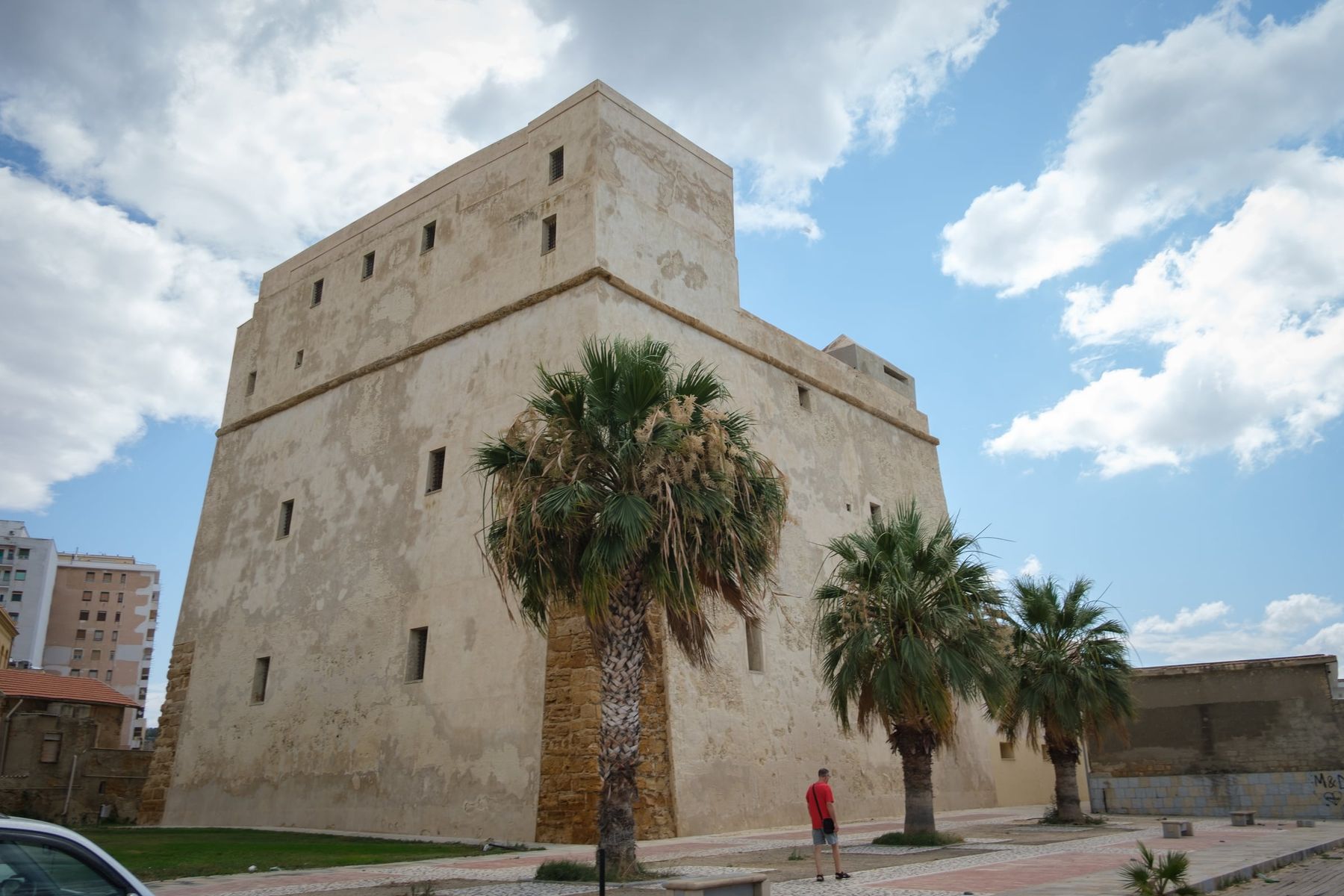
According to articles from 2013 and 2019, on via Roma there is a bronze statue of Montalbano, unveiled in 2009: it shows the inspector as Camilleri describes him, with a moustache and thick hair, not with the face of the TV actor Luca Zingaretti. According to the art magazine Artribune it is by the sculptor Giuseppe Agnello. Nearby, also on via Roma, there is a statue of Luigi Pirandello. The rest of the town, from the Tower of Charles V to the harbour, is on our page on Porto Empedocle, about 5 km by road from the Scala.
Where was Pirandello born?
Luigi Pirandello, the writer and playwright, was born on 28 June 1867 in the house at Caos, a rural area between Agrigento and Porto Empedocle, where his family had taken refuge from cholera. The 18th-century house belonged to his mother's family, the Ricci Gramitto. Damaged in 1944 by an exploding ammunition depot, it has been a national monument since 1949 and has belonged to the Sicilian Region since 1952. According to sources from 2021-2023, it is a house museum run by the Valley of the Temples Archaeological Park, with six rooms, a recorded narration by the actor Leo Gullotta and content in Italian with English subtitles; the room called "Life and death" holds the Greek vase that once contained his ashes.
Since 10 December 1961 the ashes have been sealed inside a rock, a boulder from the Rupe Atenea hill shaped by the sculptor Marino Mazzacurati, at the end of a path near the house. The monument stands where the great pine used to be, under which Pirandello liked to think and write. The pine is no longer there: many guides still describe it as standing, but the Park says it no longer exists, and according to the news site Balarm a whirlwind damaged it beyond repair in November 1997.
From the Scala it is about 9 km by road. It is open every day from 09:00 to 19:30, with last entry at 19:00. A ticket costs €6 full price and €3 reduced; where to buy: online on CoopCulture or at the ticket office. The visit to the writer's funerary monument is included in the ticket and is possible until one hour before sunset. If you plan to see the temples the same day, our guide from Agrigento to Scala dei Turchi explains how the tourist bus links them.
Did Goethe see the Scala?
We don't know: his diary does not mention it. In his Italian Journey Goethe reached Girgenti, as Agrigento was then called, on the evening of 23 April 1787, coming from Sciacca, and stayed until the 28th. On the 27th he walked down towards the sea. But he names neither Realmonte, Porto Empedocle nor Scala dei Turchi: web pages attributing a line about the Scala to him should be treated as false until proven otherwise.
Which films and videos were shot at the Scala?
- Malèna (2000), by Giuseppe Tornatore: some scenes were filmed at Scala dei Turchi in 1999. This is confirmed by the Italy for Movies portal.
- Coma_Cose, "L'addio" (Sanremo Festival 2023): the music video was shot entirely at the Scala.
- Not verified: Pif's film In guerra per amore (2016), the second season of the series Màkari and the Montalbano episodes listed by Italy for Movies. For none of them did we find a production source or the exact scene.
For professional filming and shoots, the municipality required the Pass Verde permit in 2024 and 2025, still mentioned by the press in 2026, as explained in our page on the visiting rules. The municipality also protects commercial use of the Scala's image: according to La Sicilia, in 2026 it sent a formal warning to a mineral water brand, as told on our page on UNESCO, ownership and the news.
Frequently asked questions
Is Scala dei Turchi in Inspector Montalbano?
In the books, yes, in one verified story: the short story La prima indagine di Montalbano (Montalbano's first case), where the inspector drives to the Scala. It is also the scene of the final crime in Camilleri's first novel, which is not a Montalbano book. The TV series was shot mainly around Ragusa, and no source says in which episode, if any, the Scala appears.
Which town is the real Vigata in Montalbano?
Porto Empedocle, Camilleri's home town, about 5 km by road from the Scala. In 2003 Camilleri authorised the town to use the name Vigata alongside its own, in a document that went missing and was found again in 2023.
What can you see in Porto Empedocle?
According to the sources we consulted, on via Roma there is a 2009 bronze statue of Montalbano, showing him as described in the books rather than with the TV actor's face, and a statue of Pirandello nearby. Other places listed by online guides have not been verified by us yet.
Where was Pirandello born?
In the house at Caos, between Porto Empedocle and Agrigento, about 9 km by road from the Scala. It is a house museum run by the Valley of the Temples Archaeological Park, open every day from 09:00 to 19:30, with last entry at 19:00. A ticket costs €6 full price and €3 reduced.
Is Pirandello's pine tree still there?
No. The Archaeological Park says it no longer exists and, according to the news site Balarm, a whirlwind damaged it beyond repair in November 1997. The rock holding the writer's ashes still stands where the pine used to be.
Did Goethe see Scala dei Turchi?
We don't know. Goethe was in Girgenti, today's Agrigento, from 23 to 28 April 1787 and walked down towards the sea, but his diary mentions neither the Scala nor Realmonte.
Related guides
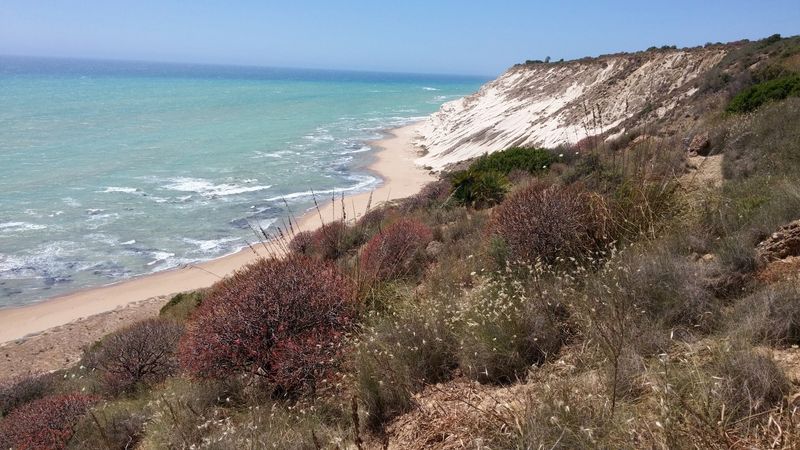
Nature at Scala dei Turchi: plants, loggerhead turtles and coastal birds
Scala dei Turchi is a Natura 2000 site: orchids, juniper and dunes, the loggerhead turtles that nest on this coast, the water quality and how to behave.
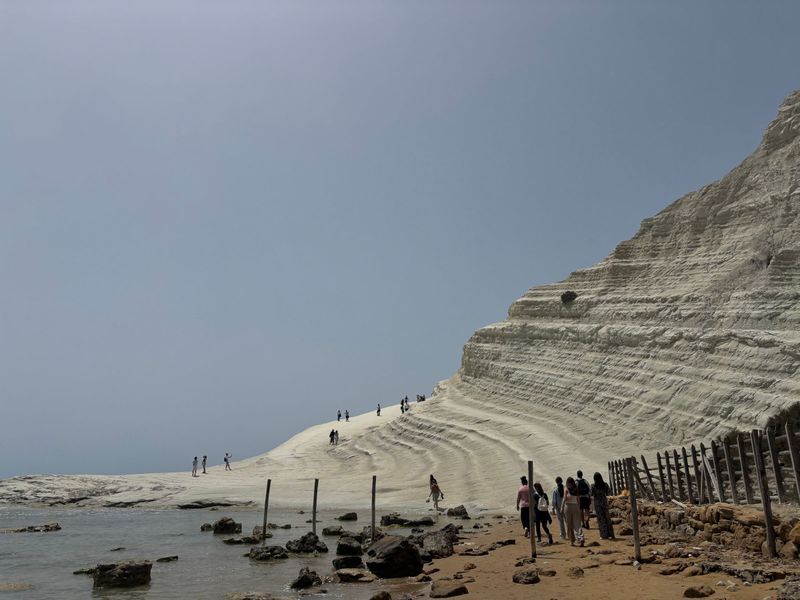
Scala dei Turchi tickets in 2026: price, booking and opening hours
Scala dei Turchi tickets 2026: €6, paid on site by card only, no online booking. Opening hours, daily cap, free entry and the outdated info to ignore.
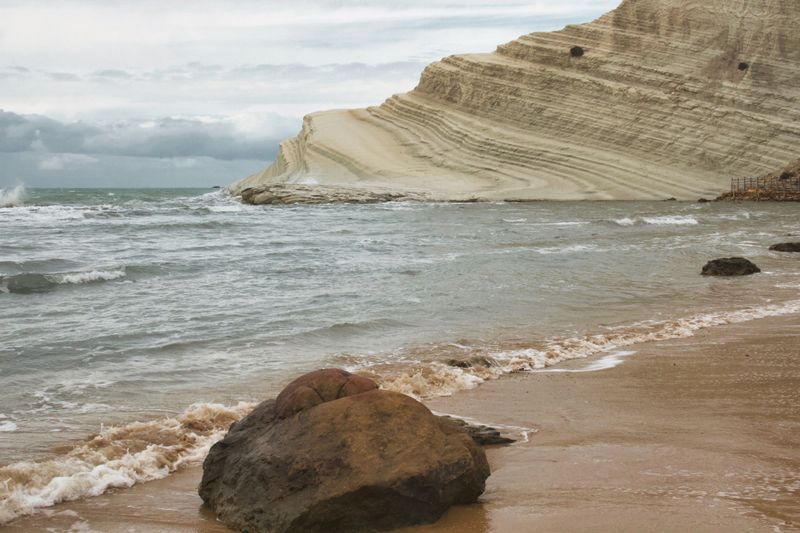
Is Scala dei Turchi open today? Current status and closures
Is Scala dei Turchi open or closed today? Status with the date of the last official update, why it closes (weather, heat, filming) and where to check.