The geology of Scala dei Turchi: white marl, Trubi and how it formed
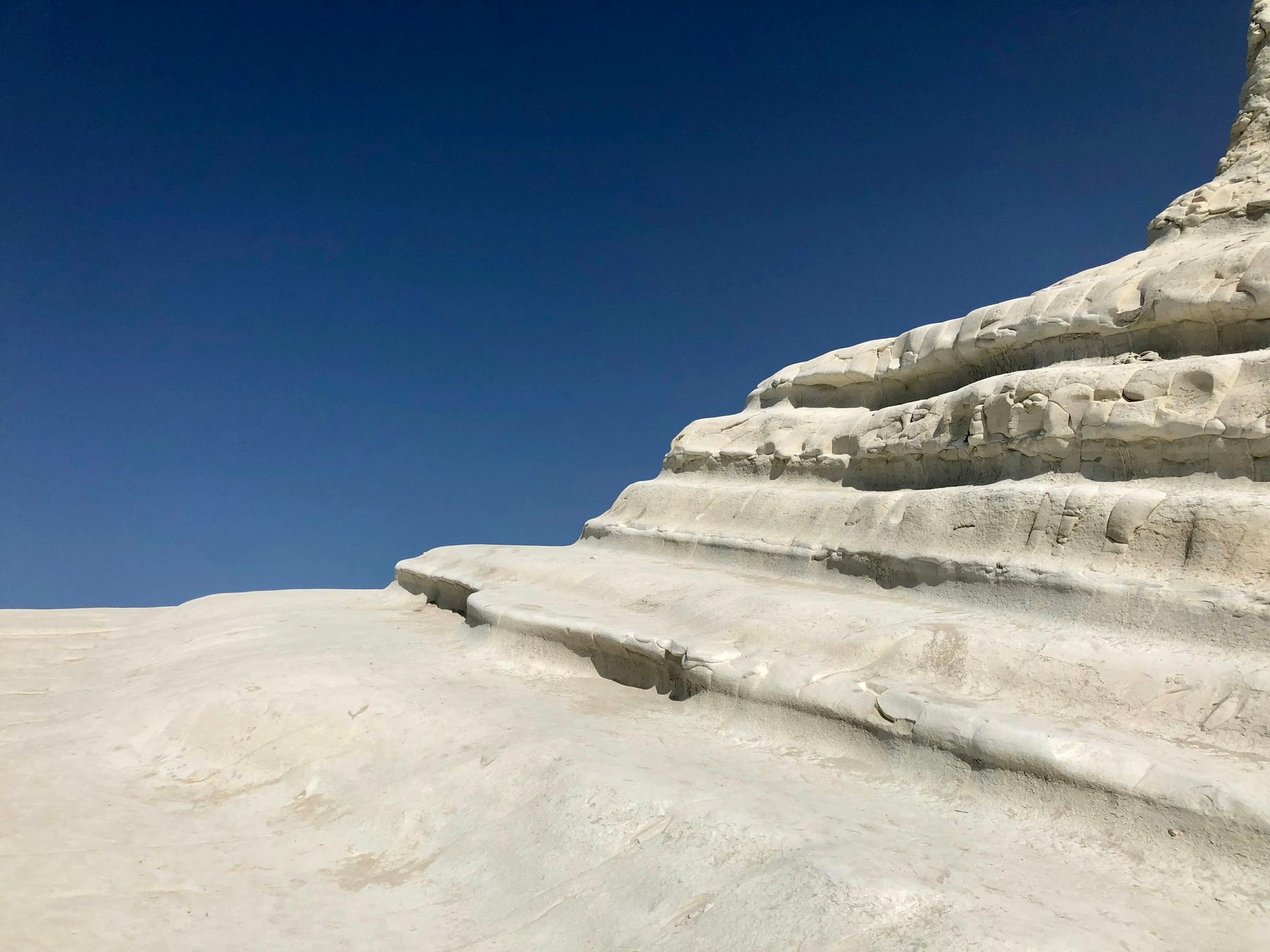
In short. Scala dei Turchi is made of Trubi marl: an open-sea mud made mostly of the microscopic shells of plankton, later turned into rock. It is white because those shells are calcium carbonate and the rock holds very little clay and river sand. It was laid down between about 5.3 and 3.6 million years ago, just after the Mediterranean had filled up with water again. The pale and grey bands are a calendar: each group of layers about a metre thick represents roughly 21,000 years.
What is marl, and why isn't it limestone?
Marl is a sedimentary rock that mixes calcium carbonate with a smaller share of clay. Geologists call these layers the Trubi formation and describe them as a rhythmic alternation of marl and marly limestone. A 2011 study of 56 samples from the Scala stretch measured between 62.4% and 83.5% carbonate, with the white levels usually richer. The carbonate comes from foraminifera and coccoliths, plankton shells that sank to the seabed. So the popular claims that it is limestone (as the English Wikipedia says), clay or gypsum are all wrong; gypsum does exist, but underneath, in older deposits.
How did the steps form, and why are the layers a calendar?
The layers repeat in groups of four, grey, white, beige and white, each group about a metre thick. Each group matches one cycle of precession, the slow wobble of the Earth's axis, about 21,000 years, which changed rainfall and so the amount of clay rivers carried to the sea. By counting these cycles geologists built a clock for the Pliocene, and on this coast there are two "golden spikes", the international reference points that define the start of a geological period: one at Eraclea Minoa for the start of the Pliocene, one at Punta Piccola near Porto Empedocle. Since 2024 Scala dei Turchi has been site 124 on the IUGS geological heritage list, which is not a UNESCO listing.
The steps are the result of differential erosion: rain, wind and sea wear away the softer, marlier layers faster and leave the more limy ones standing out. That gives the "scala" (staircase) its shape; the "Turchi" part is explained on our page on why it is called Scala dei Turchi.
What was the Messinian salinity crisis?
Underneath the Trubi lie the rocks of a very different Mediterranean. Between about 5.97 and 5.33 million years ago the sea became a hypersaline basin and gypsum and thick layers of salt built up on its floor. The crisis ended when Atlantic water flowed back in through the Strait of Gibraltar: the white marl, resting sharply on the sands below, marks the return of the open sea. Whether the Mediterranean dried out completely is still debated. That salt is still mined at Realmonte, but we found no confirmation that the "salt cathedral" carved inside the mine is open to visitors.
Why does it keep crumbling?
The marl is soft and the cliff collapses: rockfalls were reported in December 2017, January 2020 and April 2021. Sources disagree on the main cause, from surface and ground water to the concrete built around it and visitors' footsteps, and we found no published measurement of how fast it is retreating. That is why the upper part is closed: where you can walk, and in what shoes, is on our page on the visiting rules. To see the same marl elsewhere on the coast, go to Capo Rossello or Eraclea Minoa.
Frequently asked questions
What is Scala dei Turchi made of?
Marl of the Trubi formation, alternating layers of marl and marly limestone made largely of the microscopic shells of calcareous plankton. In samples measured on one stretch of the cliff, calcium carbonate ranges from about 62 to 84%: it is neither pure limestone nor clay.
Why is Scala dei Turchi white?
Because it is made mostly of the calcium carbonate of tiny shells (foraminifera and coccoliths) and contains very little clay and sand brought by rivers. The grey layers are the ones with more material from the land.
How was Scala dei Turchi formed?
Plankton mud settled on the floor of an open sea, layer after layer, between about 5.3 and 3.6 million years ago, and turned into rock. The steps came later through erosion: rain, wind and sea wear away the softer layers first and leave the more limy ones standing out.
What is marl?
A sedimentary rock that mixes calcium carbonate with a smaller share of clay. The marl of Scala dei Turchi belongs to the Trubi formation, which is found in many parts of Sicily and has its most typical outcrops on this coast, between Eraclea Minoa and Capo Rossello.
Is the cliff at risk of collapse?
Yes: marl is a soft rock and the cliff has had documented rockfalls, for example in December 2017 and April 2021. That is why the upper part is closed and visits are limited to the lower part.
Related guides
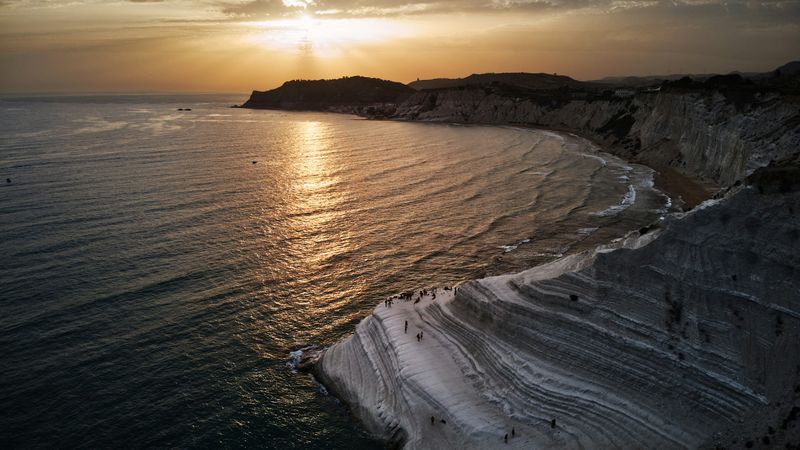
Why it is called Scala dei Turchi: history, pirates and legend
Why is it called Scala dei Turchi, the Turkish Steps? The origin of the name, the Saracen and Barbary raids on Sicily, the legend and facts to know.
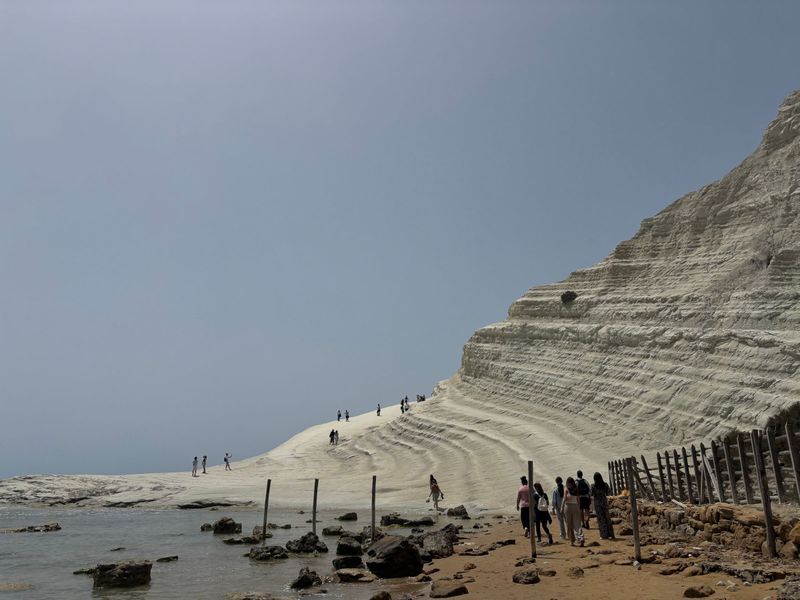
Is Scala dei Turchi a UNESCO site? Ownership, red powder and verified facts
Is Scala dei Turchi a UNESCO World Heritage site? Who owns it, what happened with the red powder in 2022 and the latest news, with dated sources.
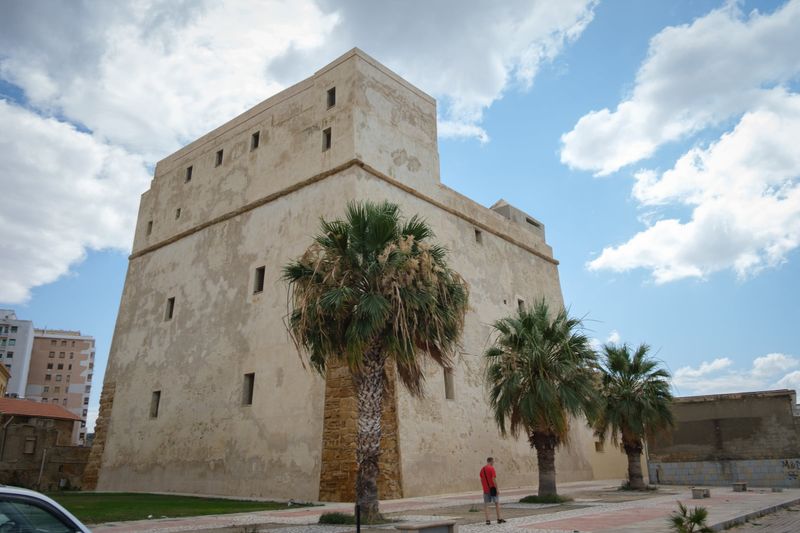
Camilleri, Montalbano and Pirandello: Scala dei Turchi in books and films
Is Scala dei Turchi in Inspector Montalbano? Where it really appears in Camilleri's books, Pirandello's birthplace nearby and the films shot on this coast.